Backlinks Guide
Understanding Backlinks
Section titled “Understanding Backlinks”What is a backlink?
Section titled “What is a backlink?”A backlink is a link from another website to AerialPS.
Backlinks are one of the signals that Google can use to understand the authority, relevance, and popularity of a website. Google’s original PageRank system was based heavily on the idea that links between websites could be treated as a signal of importance.
“PageRank works by counting the number and quality of links to a page to determine a rough estimate of how important the website is.”
Read more about PageRank on Wikipedia
Below is a visual demonstration of PageRank, as documented by Wikipedia:
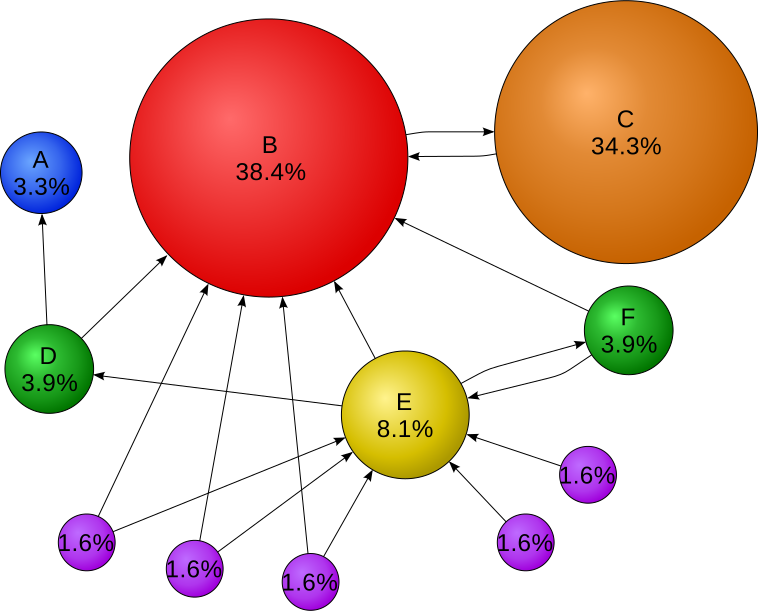
The websites represented by A, B, C, D, E, and F link to one another with different levels of authority. The smaller purple circles represent smaller websites.
The important takeaway is not simply that more backlinks = better rankings. A link from a relevant, established website can be considerably more valuable than a large number of irrelevant or low-quality links.
Getting Backlinks
Section titled “Getting Backlinks”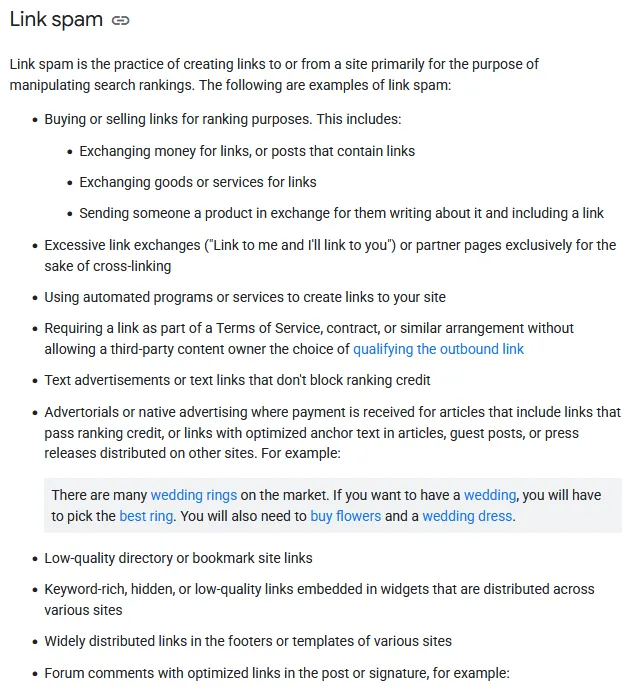
Method 1: Create Link-Worthy Content
Section titled “Method 1: Create Link-Worthy Content”The most sustainable way to earn backlinks is to create something that other websites have a reason to reference.
For AerialPS, this could include:
- Detailed guides about drone regulations in Singapore
- Drone inspection case studies
- Before-and-after inspection examples
- Original research or industry statistics
- Drone photography location guides
- Technical explanations of drone inspections
- Downloadable reports, checklists, or resources
- High-quality photography that other websites can reference
The important distinction is that the content should be useful independently of the backlink. Creating an article solely because it contains a link opportunity usually produces weak content.
Method 2: Create Unique, Original Content
Section titled “Method 2: Create Unique, Original Content”Original information is considerably easier for other websites to reference than generic content.
For example, instead of writing an article titled “What Is a Drone Inspection?”, we could publish something based on expertise:
Example:
“Drone Inspection Cost Comparison: Traditional Scaffolding vs. UAV Inspection in Singapore”
An article containing original comparisons, photographs, measurements, observations, or data gives journalists, businesses, and other websites a reason to cite it.
The same principle can be applied to photography.
If AerialPS produces high-quality aerial photographs of Singapore landmarks, construction sites, industrial facilities, or developments, those images can become assets that other websites naturally reference. Gallery Page can be utilized for this purpose.
Method 3: Guest Blogging
Section titled “Method 3: Guest Blogging”Guest blogging involves writing an article for another relevant website and receiving an appropriate author or contextual link back to AerialPS.
The important part is relevance.
Good targets would include:
- Construction publications
- Property and real-estate websites
- Architecture blogs
- Engineering publications
- Drone-industry websites
- Singapore business publications
- Facilities-management websites
- Photography publications
Avoid websites that accept articles from anyone purely in exchange for a backlink.
The goal is to contribute something genuinely useful to the publication, not to produce an article whose primary purpose is acquiring a link.
A great example of this would be; a collaborative study with an industry that is related.
Method 4: Supplier and Partner Links
Section titled “Method 4: Supplier and Partner Links”Businesses that AerialPS already works with can provide natural backlink opportunities.
For example:
- Equipment suppliers
- Drone manufacturers
- Software providers
- Construction companies
- Property developers
- Architecture firms
- Engineering companies
- Photography partners
- Event companies
If AerialPS has completed work for a company, that company may be able to reference the project from its own website.
A project case study is particularly useful because the link exists for a legitimate reason: the website is documenting work that was actually completed.
Method 5: Digital PR
Section titled “Method 5: Digital PR”Digital PR involves creating something interesting enough that journalists, publications, or industry websites want to cover it.
For AerialPS, potential stories could include:
- New drone technology being used for inspections
- Cost savings from drone inspections
- Interesting findings from an inspection
- Drone regulations and their impact on businesses
- Aerial photography of major developments
- Original research into Singapore’s drone industry
The objective is not to ask every publication for a backlink.
Instead, create a story or resource that publications have a reason to reference. The backlink becomes a by-product of the coverage.
Method 6: Reclaim Existing Mentions
Section titled “Method 6: Reclaim Existing Mentions”AerialPS may already be mentioned online without receiving a backlink.
Search for:
"AerialPS""Aerial Perspectives Studios""aerialps.com"- Existing project names
- Brand mentions on social media and publications
If a website mentions AerialPS but does not link to the website, it may be appropriate to contact the publisher and ask them to add the relevant link.
This is one of the simplest backlink opportunities because the website has already decided that AerialPS is worth mentioning.
What to Avoid
Section titled “What to Avoid”Do not pursue backlinks simply because a website has a high domain authority score.
Avoid:
- Buying large packages of backlinks
- Automated backlink-building services
- Link farms
- Private blog networks
- Spammy directories
- Irrelevant guest-post websites
- Comment spam
- Forum profile links created solely for SEO
- Excessive exact-match anchor text
- Websites that exist primarily to sell links
Google specifically identifies manipulative links intended to influence rankings as link spam.